Program Overview
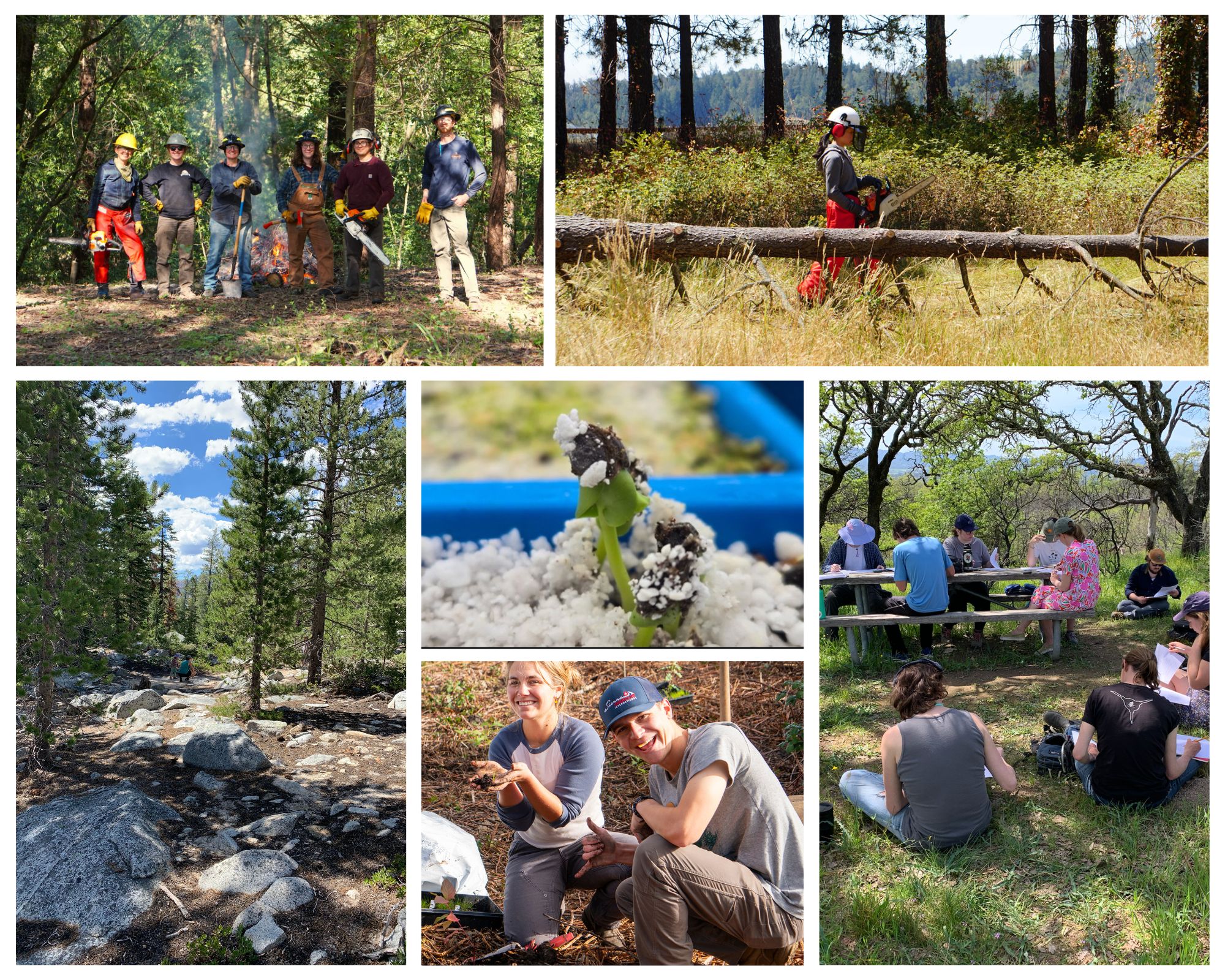
The Natural Resources program prepares students with the knowledge and practical skills needed to work in the natural resources, environmental, and land management fields. The program offers both an Associate in Science degree and two certificates, with hands-on courses that connect classroom learning to real-world applications. Classes cover topics such as watershed and ecosystem management, native plants, forestry, restoration, and park and recreation management. Students gain experience through fieldwork, demonstrations, workshops, field trips, and projects at SRJC’s 365-acre Shone Farm and other sites throughout the region. Graduates are prepared to pursue entry-level careers in a variety of natural resources and environmental fields or continue their education.
- What is Natural Resource Management?
Natural Resource Management is the practice of protecting, restoring, and sustainably managing forests, water, soil, wildlife, plants, and other natural resources. The field combines science, environmental stewardship, and practical land-management skills to address challenges such as habitat restoration, wildfire resilience, watershed health, and biodiversity. Students in SRJC’s Natural Resources program gain hands-on experience in these areas through fieldwork, labs, and projects at Shone Farm and throughout the region, preparing them for careers in natural resources, environmental management, and land stewardship.
- What are the degrees and certificates offered?
The Santa Rosa Junior College Natural Resources Program offers a Natural Resource Certificate, a Wildfire Resilience Certificate and an Associates Degree in Natural Resources. A student enrolled at least part-time can expect to graduate in two years. While we suggest starting with NRM 12, most of the classes are non-sequential and can be taken out of order, with some exceptions and depending on availability.
You can find more information at the following locations:
Associate of Science, Natural Resources
- How do I take Natural Resources courses?
After enrolling at Santa Rosa Junior College and receiving your student ID, you can enroll in any Natural Resource courses. There is not a separate application to the Natural Resource program and most courses do not have prerequisites to enroll.
View the class schedule here: https://classes.santarosa.edu/.
We recommend setting up an appointment with a Counselor to develop an educational plan. For more information about SRJC's Counseling department, check out their website: https://counseling.santarosa.edu/meet-counselor.
- Are classes offered online or in-person?
Our classes are offered in a mix of in-person, online, and hybrid formats. Many courses combine online lectures with in-person labs and field experiences, allowing students to take advantage of the excellent resources at Shone Farm while developing the hands-on skills needed for careers in natural resources. In-person classes also give students opportunities to build connections with classmates, instructors, and industry professionals. This flexible approach allows students to balance their education with work and other commitments while gaining the practical experience employers value.
- Where will in-person classes be taught?
Natural Resources classes take place at SRJC’s Shone Farm, where students can learn in a real-world natural resource management setting. The 365-acre property provides access to forests, waterways, native plants, and diverse ecosystems that serve as living laboratories for hands-on learning. Learning at Shone Farm gives students the opportunity to develop the skills, field experience, and professional confidence needed for careers in natural resources and environmental management.
- Why study Natural Resources at SRJC?
A Natural Resources education can take you in many directions. Our students have transferred to a wide range of four-year colleges and universities and gone on to graduate programs, including master’s degrees in fields related to ecology, environmental science, forestry, conservation, and natural resource management.
Others have launched careers in natural resources right here in Sonoma County and throughout California. Career opportunities include ecological restoration, forestry and forest management, environmental education, conservation, parks and open space management, watershed restoration, wildlife habitat management, environmental consulting, arboriculture, and native plant propagation and restoration.
Whether your goal is to transfer to a four-year university, pursue a graduate degree, or begin a career in the field, the Natural Resources program provides hands-on experience, practical skills, and connections to the natural resource community.
Graduates will benefit from the opportunity to pursue a number of different entry-level positions in natural resources, more information can be found here with the U.S. Bureau of Labor Statistics.
Here is what our students have to say about the program:
"My experience in Santa Rosa Junior College’s Natural Resource Management program, particularly the hands-on learning opportunities at Shone Farm, has been an important part of my educational journey. The program gave me a strong foundation in natural resource science, and it gave me opportunities to apply what I was learning in the classroom to real-world situations. That combination of academic and practical experience prepared me to move confidently into the Bachelor’s/Accelerated Master’s program I’m pursuing today and to compete on an even playing field with my peers."
-Mark
- More Questions?
If you have additional questions about the Natural Resources department or courses offered, please contact us!
Nicole Schlumberger
Natural Resources Program Coordinator
Agriculture and Natural Resources Department
Shone Farm 125
Phone: 707-535-3708 ext 3708
Email: nschlumberger@santarosa.edu
Degrees Offered
- Associate of Science
The Natural Resources major is a transfer-oriented program. Students conduct introductory coursework that prepares them to successfully complete a Bachelor's degree in these or related fields at a 4-year college or university. The major also provides career-oriented training necessary for technician-level positions in natural resource conservation and the outdoor recreation industry with government agencies and the private sector.
The program consists of 20 units of core requirements and 6 units of elective courses that allow the student to specialize or focus on a particular area of Natural Resources.
More information can be found here: Programs of Study: Natural Resources
- Certificate in Natural Resources
Earn your certificate in Natural Resources. Students will gain foundational knowledge and practical, hands-on experience in natural resource management, environmental stewardship, and land management practices. Certificate coursework covers topics such as ecology, native plants, forestry, watershed management, and restoration, preparing students for entry-level careers in natural resources and related fields.
More information can be found here: Natural Resources Certificate.
- Certificate in Wildfire Resilience
Santa Rosa Junior College’s Wildfire Resilience Program (WRP) is based at Shone Farm and offers immersive hands‑on training in natural resources land management tailored to prepare students for ecological fire stewardship. Operating across Shone Farm’s 120 forested acres, participants learn practical skills in thinning, burn pile creation, shaded fuel break construction, invasive species control, restorative plantings, and long‑term treatment monitoring—all as part of the NRM 145A/B courses in wildfire stewardship and ecological restoration. The curriculum emphasizes the safe use and maintenance of tools—including chainsaws, wood chippers, brush cutters, and GPS mapping devices—to conduct fuel reduction operations and manage vegetation in ways that reduce wildfire risk while restoring ecosystem health.
-More information about the program and how to enroll: Wildfire Resilience Program Info
-Certificate Information: Wildfire Resilience Certificate
Natural Resources course Overview
- NRM 12 - Introduction to Environmental Conservation
An introduction to principles and techniques for the management, conservation, and sustainable use of natural resources. Includes an examination of the causes, consequences, and solutions of contemporary issues affecting environmental conservation.
- NRM 51 - Wildland Trees and Shrubs
Students will study the taxonomy, physiology, and ecological relationships of trees and shrubs of Central and Northern California. Botanical and anatomical characteristics of these plants will be emphasized. Course includes field trips.
- NRM 63 - Environmental Education
Introductory course designed to prepare students to implement environmental education curricula in formal and informal educational settings. Topics include history and principles of environmental education, guidelines for K-12 environmental education, curriculum development, and applied teaching techniques for both formal and informal settings. This course includes site visits to K-12 classrooms implementing environmental education curricula.
- NRM 72 - Forest Fire Control and Its Use
Principles of fire behavior, control and prevention for natural resource managers and first responders. Also covers the prescribed use of fire in natural resource management applications (fuel reduction, invasive species control, etc.).
- NRM 84 - Introduction to Fish and Wildlife Conservation
Introduction to the study of fish and wildlife conservation management principles, techniques, and issues, including habitat management and population estimation. Students will become familiar with local and regional wildlife species, as well as develop expertise in wildlife identification and common field techniques used by wildlife managers.
- NRM 86 - Watershed Resource Management
Introduction to the methods and techniques used in measuring, monitoring, and assessing watershed health in North Coast streams. Topics of study include identification of the specific factors limiting ecosystem productivity (vegetation, fish, etc.) identification of the critical habitat needs (plants, macroinvertebrates, water quality, etc.) and methods for assessing and monitoring watershed resources.
- NRM 87 - Geographic Info. Systems Applications in Natural Resources
Students will explore the use of Geographic Information Systems (GIS) to analyze and interpret natural resources data, and to solve common conservation problems. This course introduces the value and uses of GIS software, with an emphasis finding and evaluating the quality and fitness of published data sources, applying GIS overlay and proximity analysis tools to subject data, and preparing maps for publication and presentation of findings. Conservation topics include the analysis of habitat for endangered species, visualization and assessment of watershed health, and analysis of the potential impact of human activities on natural resources under a land manager's stewardship.
- NRM 88 - Watershed Ecology and Restoration
- An introduction to watershed restoration ecology methods, techniques, and tools used to restore and enhance watershed health.
- NRM 91 - Rangeland Management in a Changing Climate
In this course, students will learn basic principles of range management as they apply to various regions and vegetative types on California rangelands. This course examines the relationship of range management practices to livestock production, wildlife management, forestry, hydrology, and other land uses. Multiple field trips are required.
- NRM 104 - Ecological Restoration
In this course students will learn hands-on techniques for planning, planting, monitoring, and maintaining local restoration projects. Students will explore native plant communities as models for restoration. Students will apply various restoration techniques by conducting field work at Shone Farm and other Sonoma County locations.
- NRM 133 - Current Topics in Natural Resource Management
In this course, students will explore new and/or developing theories, techniques, and practices related to the management of natural resources. Course hours and units for each section will be determined by the scope and detail of the selected topic.